
This short series of paintings explores combining lino printing with traditional oil portraiture, representing queer subjects and bringing people who would have historically never been able to openly express themself into the limelight.
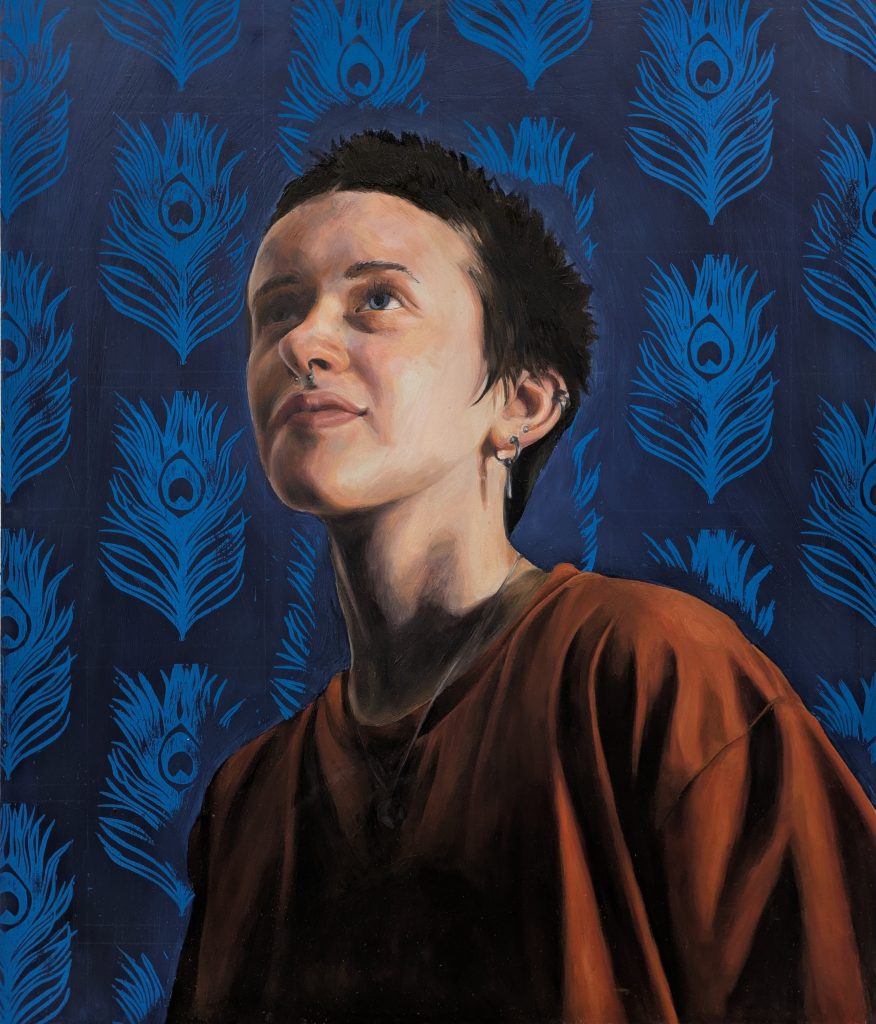
The peacock stands as a symbol of pride, rebirth and beauty, with it being no surprise that they have become popular imagery within the LGBTQ+ community. The peacock is naturally flamboyant and not afraid of showing off their tail feathers, subscribing to an over the top appearance and a beautiful show of colour. As with many birds, the males of the species are considerably more colourful compared to female birds, showing flamboyance to not be necessarily always feminine in the way our human culture tells us it is.
Peacock feathers started being used by homosexual men in the late 19th and early 20th centuries to identify themselves to other homosexual men (in a similar fashion to the green carnations). Artists also used them as a motif within their paintings to subtly express their identity through their work.
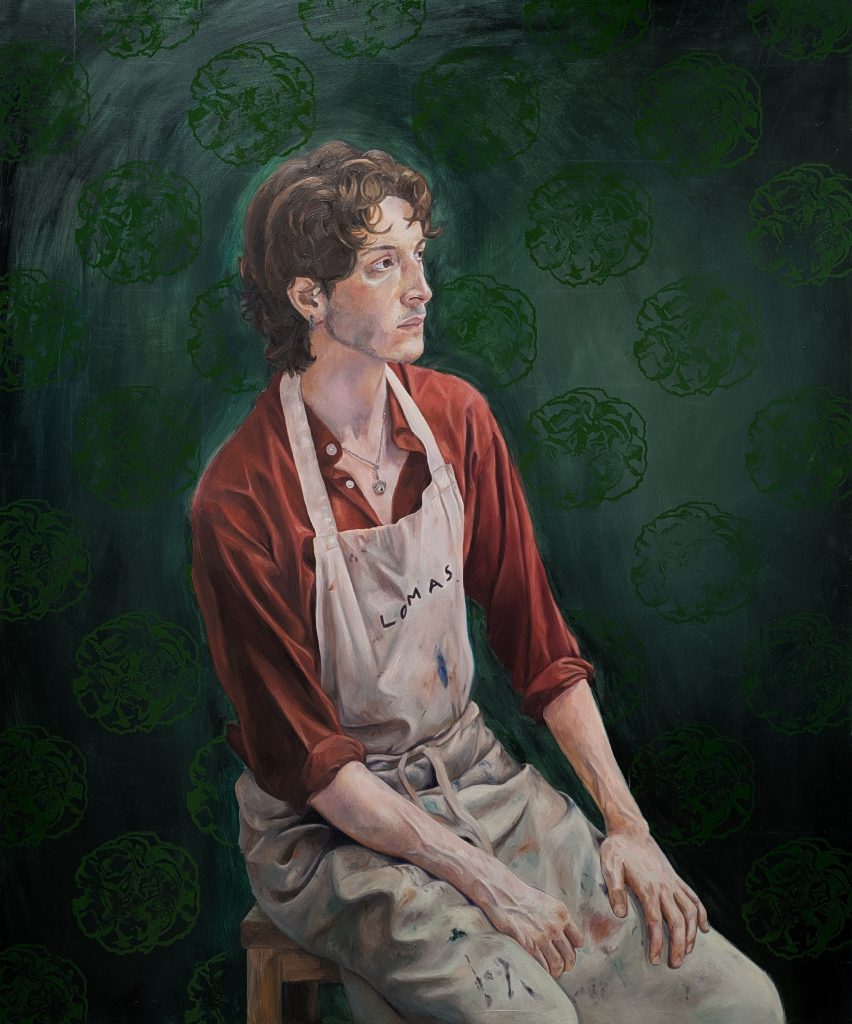
The green carnation is another historic queer symbol, popularised by Oscar Wilde and his followers, wearing one as a subtle hint of their homosexuality. In Wilde’s time, queer people could not be open about their identity and so symbols like these were used to subtly flag themselves and communicate to other people that they were part of the same community.
Flowers have been historically used within queer spaces, either to communicate among ourselves or to express our identities subtly to the world, showing up to Wilde’s plays adorned with green carnations, using the imagery in their poetry or more recently using them in memorial of those who were persecuted or even killed for their queerness.
Green has also been referred to in the past as the “inverts” (pejorative term for queers at the time) favourite colour.
Other flowers popular among the queer community have included roses, pansies, violets and lavender, each with their respective histories and uses. Lavender is likely the most used flower in modern queer culture, utalised by the most amount of people and being a namesake for things such as lavender marriages or the lavender scares.
Nowadays it’s unknown if the references to lavender are refering to the colour or the flower, but either way it’s become a staple of queer culture, being used in movements such as the “lavender menaces”, a term originally used to shun lesbians from association with the National Organisation of Women in the late 60s.
Not long after, lesbian activists took action, joining the organisation’s events and revealing themselves to be wearing t-shirts saying “Lavender Menace” on them, earning the crowd’s support and causing NOW to adopt lesbian rights as a concern of theirs, only 2 years after the original distancing.
Lavender has also been used famously in reference to Abraham Lincoln’s potential queer side, having “a streak of lavender running through him”, popularising the term and solidifying it’s roots in queer culture.
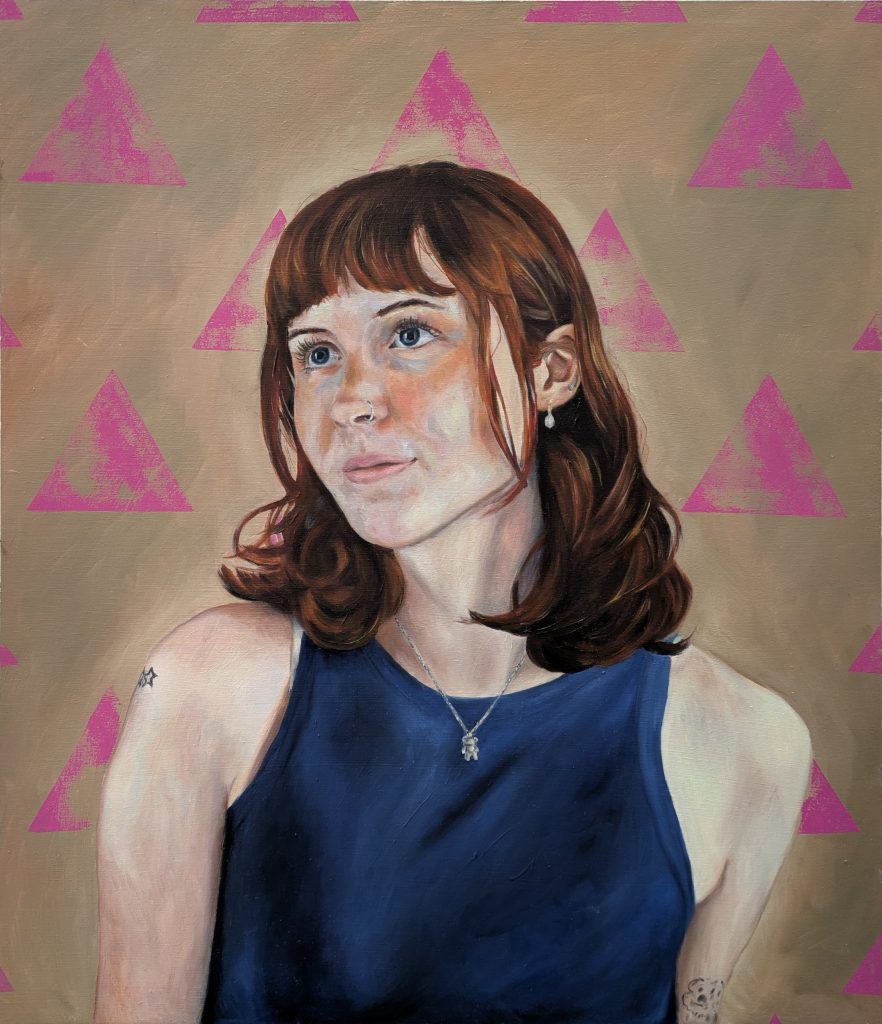
The pink triangle is a historic queer symbol, used as a flag of shame for queer people in nazi concentration camps in the second World War. Later on, around at the same time as the rainbow flag began use representing the LGBTQ community, the pink triangle was reclaimed, bringing attention to the prosecution of homosexuals in the second world war and reclaiming the symbol and using it in the gay liberation movement. It made its way into everyday use, appearing in pop culture (e.g. rocky horror), and worn with pride by individuals expressing their identities.
The triangle has been used in it’s upright orientation to represent gay and lesbian identities for many years since, transforming into more of a general symbol of queerness, both memorialising the past and being a positive symbol of self identity and community. The upright positioning is a reclaimation of it’s original, inverted use, representing the reversal of the original symbol’s negative connotations.
The triangle is also commonly accociated with the ACT UP campaigning of the 80s and 90s, drawing attention to the aids crisis and the genocidal slowing of research due to queer antagonism.